

From Finance to the Frontline: Using Investing in Climate Chaos Data to Trace the Financial Institutions Behind Brazil's Expanding Fossil Gas Frontier
How ARAYARA connected data on fossil fuel investments to environmental conflicts surrounding ENEVA's gas expansion in the Amazon
Brazil is often presented internationally as a renewable energy leader. Yet billions of dollars continue to finance the rapid expansion of fossil gas infrastructure across the country. At ARAYARA, we wanted to answer a simple question: Who are the financial institutions behind these companies? Using Investing in Climate Chaos (IICC) data together with environmental licensing documents, corporate disclosures, satellite mapping, GIS analysis and public financial information, we built a campaign tracing the financial institutions supporting ENEVA, one of Brazil's fastest-growing fossil gas companies.
Our investigation revealed how banks and investors remain connected to projects generating environmental controversy, Indigenous rights disputes and long-term fossil fuel expansion in the Amazon. The campaign transformed complex financial datasets into interactive maps, visual storytelling, technical reports and public communications designed for journalists, civil society organizations and investors. More importantly, it created a methodology that can now be replicated across other fossil fuel companies operating in Brazil.
Context and Campaign Background
ENEVA has become one of the leading drivers of Brazil's expansion of fossil gas infrastructure. At the center of this strategy is the Azulão Complex, an integrated development in the Amazon that combines gas exploration, processing infrastructure, pipelines and large-scale thermoelectric power plants. Once operational, the Azulão Complex and the Jaguatirica power plant will together represent more than 2 GW of installed capacity, locking in decades of fossil fuel infrastructure in one of the world's most environmentally sensitive regions.
At the same time, the project's expansion has generated growing legal and environmental concerns. The development overlaps or approaches Indigenous territories and protected areas, while Indigenous organizations and Brazil's Federal Public Prosecutor's Office (MPF) have challenged the environmental licensing process, arguing that mandatory Indigenous consultation and impact assessments were not adequately conducted. Court proceedings, technical investigations and requests under Brazil's Access to Information Law have revealed an increasingly complex picture of environmental governance surrounding the project.
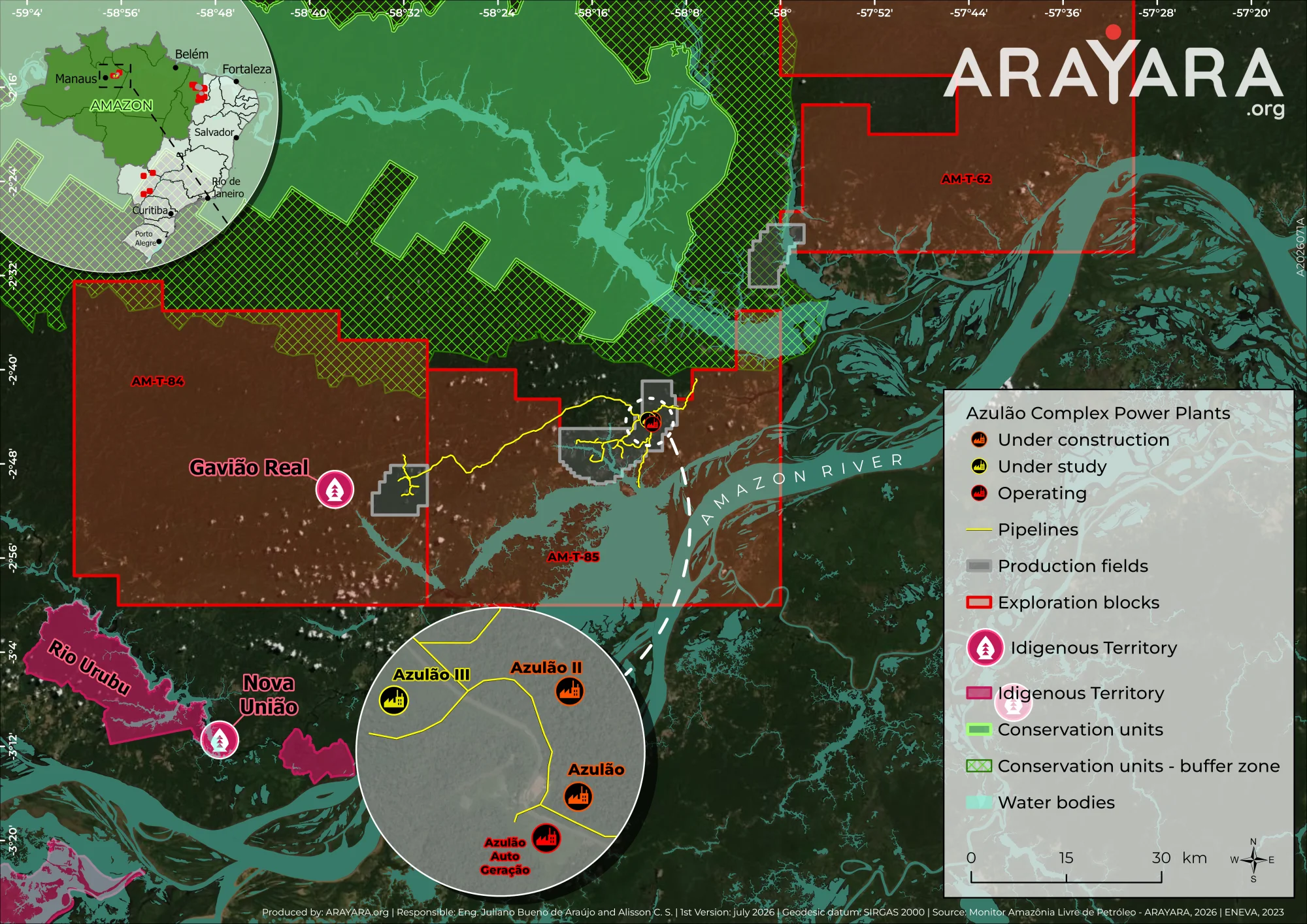
For ARAYARA, however, understanding the environmental impacts was only one part of the story. We wanted to truly understand who is invested in the continued expansion of projects facing these environmental and human rights concerns. Connecting environmental evidence with financial accountability therefore became the foundation of our campaign.
How We Used Investing in Climate Chaos Data
The Investing in Climate Chaos database became the bridge between environmental impacts and financial accountability. Rather than looking only at the physical infrastructure, we identified the institutional investors and financial institutions exposed to ENEVA as the company continued expanding its fossil gas operations. Between 2022 and 2024 the company received approximately US$3 billion in financing from banks and capital markets, with BTG Pactual, Itaú Unibanco and Bradesco among its principal private financiers.
According to the 2026 Investing in Climate Chaos dataset, the total financial exposure of investors and financiers to ENEVA exceeded US$8 billion, with BTG Pactual alone representing an estimated exposure of US$2.09 billion. In addition to private capital, the Azulão Complex also benefited from more than R$2.5 billion in public financing through the Amazon Development Fund (FDA) and the Constitutional Fund for Financing the North (FNO).
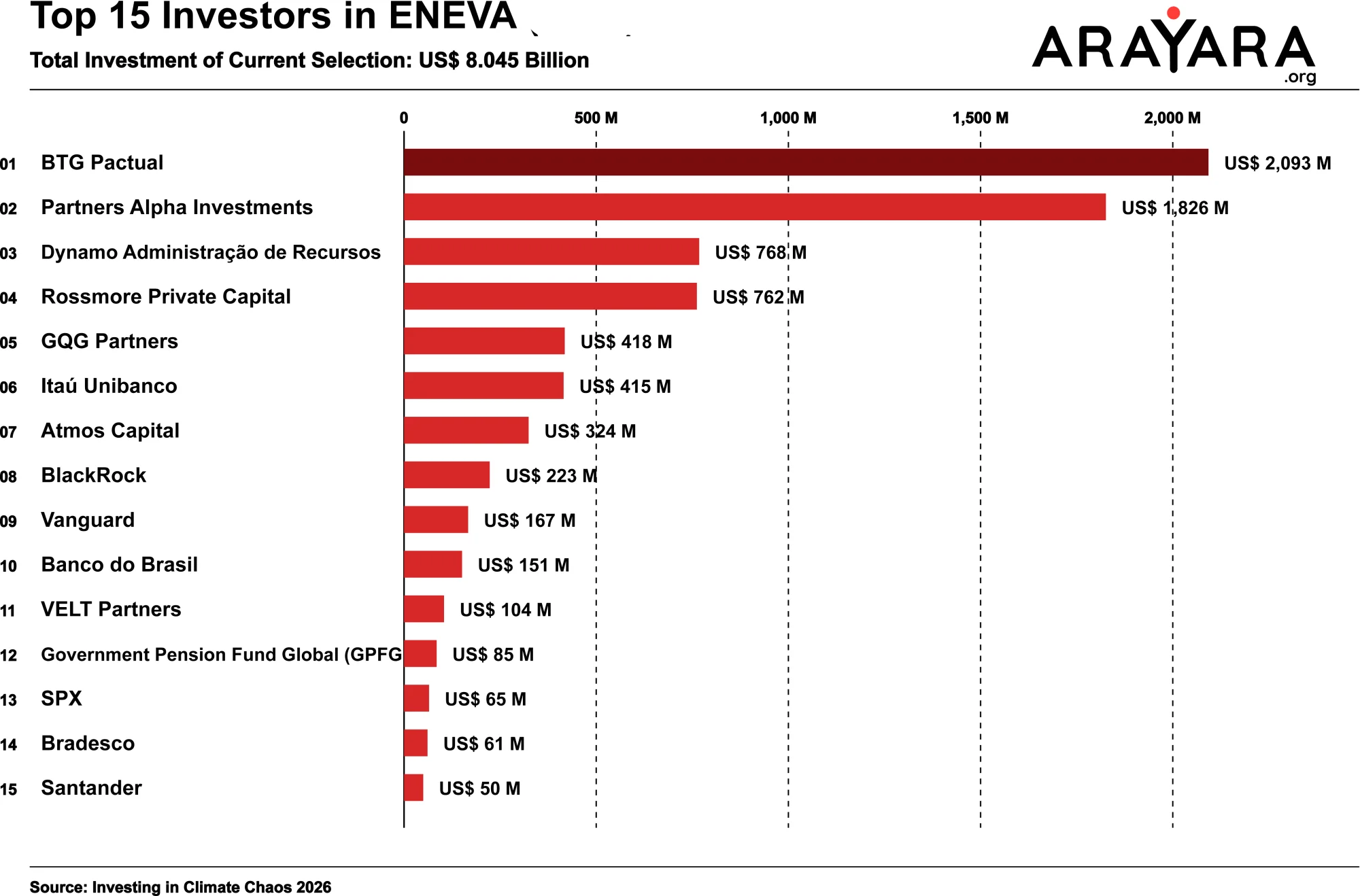
Combining IICC data with corporate disclosures and our geospatial analyses allowed us to trace bank financing, institutional investors and capital market exposure, demonstrating that the Azulão Complex is not simply an engineering project—it is enabled by a broad financial network linking commercial banks, institutional investors and public development funds.
We then integrated this financial information with maps of production fields, pipelines, thermoelectric power plants, environmental licensing processes and Indigenous and conservation territories. This approach enabled us to connect financial actors directly to infrastructure projects under construction and to areas affected by environmental and territorial conflicts.
Instead of treating finance and environmental impacts as separate subjects, the campaign demonstrated how financial decisions made by banks and investors translate into physical infrastructure on the ground, reinforcing the link between capital allocation, fossil fuel expansion and environmental accountability.
There is no such thing as neutral capital. Every bank and investor financing ENEVA is making a choice that extends beyond financial returns. When capital supports projects associated with environmental degradation and serious concerns over Indigenous Peoples' rights, financiers cannot hide behind the argument that they merely provide funding. They have both the leverage and the responsibility to prevent the harms their capital enables.
- Alisson Capelli de Souza
Author Contact

About ARAYARA
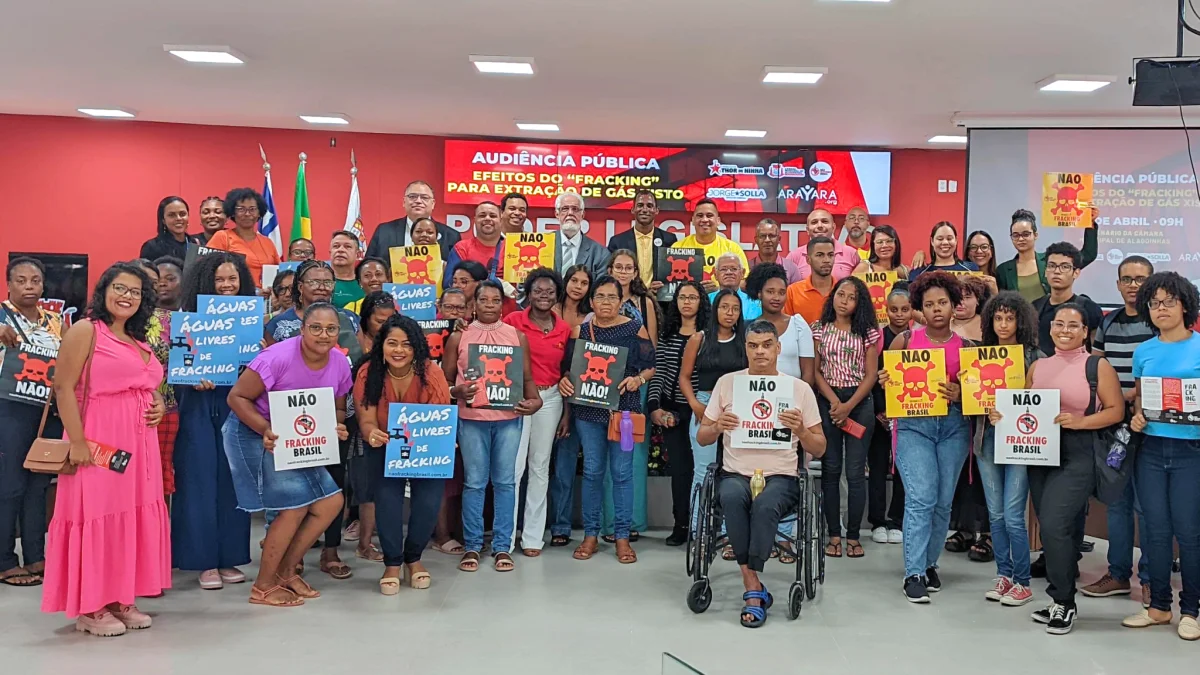
The ARAYARA International Institute is a Brazilian organization with over 30 years of history dedicated to defending socio-environmental rights, focusing on climate justice and a just energy transition. Founded by a union of scientists, activists, and local leaders, the Institute stands out for its innovative approach that connects ancestral knowledge, technical research, and social mobilization. ARAYARA's work is characterized by the convergence of science, law, public policy, and social mobilization with the goal to strengthen the voice of these communities in decision-making processes and build sustainable alternatives that respect cultural and environmental diversity on a national and international scale.
Link to WebsiteMore on Fossil Fuel Expansion in Latin America
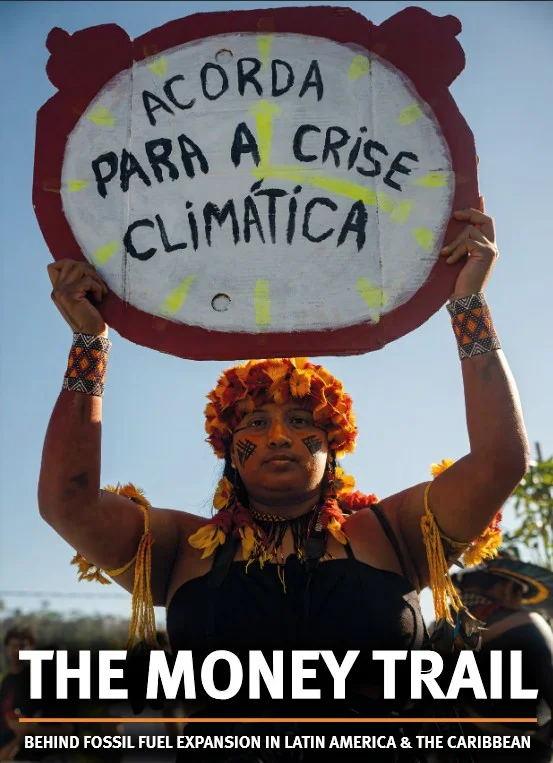
If this Insight Story caught your attention, you might be interested in Urgewald's and ARAYARA's extensive 2025 flagship report "The Money Trail Behind Fossil Fuel Expansion in Latin America & the Caribbean". Together with FARN and Conexiones Climáticas, we published an entire report on fossil fuel companies' expansion plans on the entire continent. Read the report to learn more about campaigns such as Whales or Gas in Mexico, Golfo Azul Para Siempre in Argentina, and much more.
Link to Report